Attached vs Freestanding Patio Covers: How to Choose
An attached cover connects to your house, usually at the fascia or roof line, and needs posts only on the outer edge. A freestanding cover stands on its own with posts on every side. Both work with Alumawood lattice, solid and insulated roofs. The right choice depends on your house, your yard and how you want to use the space.
Quick comparison
| Attached | Freestanding | |
|---|---|---|
| Best for | Shading a patio right outside the back door | A pool area, fire pit or a spot away from the house |
| Posts and footings | Outer edge only | Every side |
| Cost | Usually lower for the same size | Usually higher because of extra posts and footings |
| House connection | Ties into fascia or roof; the connection needs care | None |
| Permits | Usually required | Small detached covers may be exempt in some cities |
Attached covers
Attached covers are the most common choice in San Diego because they turn the patio outside your slider into usable outdoor living space. Because the house carries one side, you need fewer posts and footings, which usually keeps the price down.
The key detail is the connection. The cover attaches with a ledger or brackets to your fascia, rafters or roof, and the installer has to confirm that part of the house can carry the extra load and that water will drain correctly. On older homes, especially mid-century houses with low eaves, the cover may need to attach above the roof line or use a different bracket so it does not end up too low. Cities often review this connection closely, and Vista, for example, inspects the ledger attachment as part of the permit.
Freestanding covers
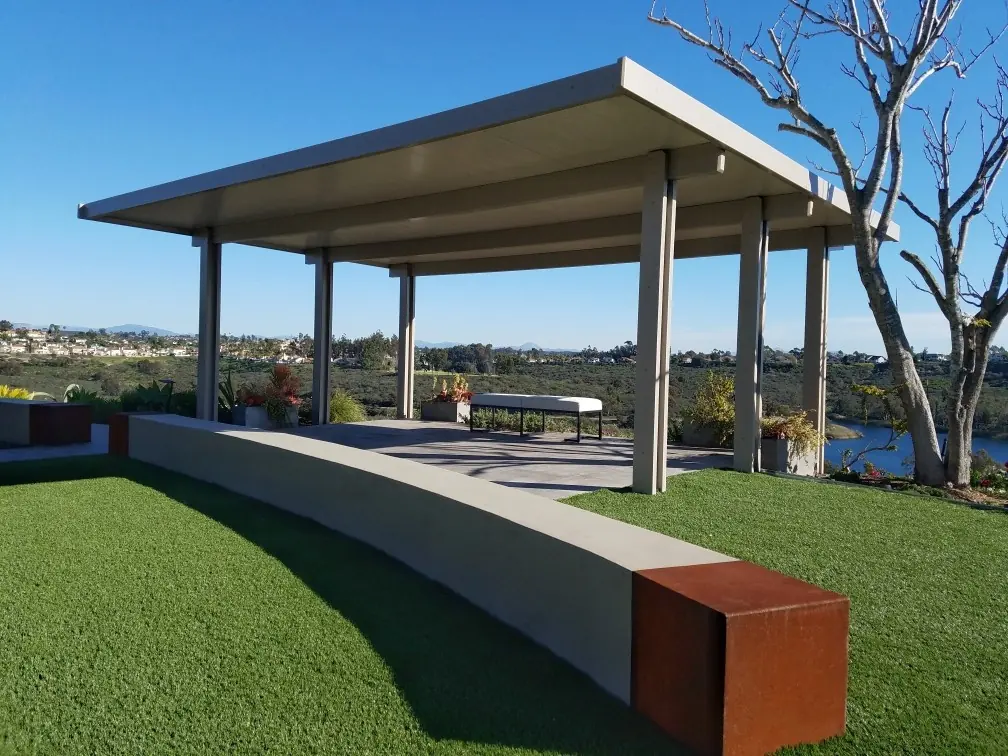
A freestanding cover works anywhere in the yard: over a pool deck, an outdoor kitchen, a spa or a lawn with a view. It never touches the house, so there is no roof tie-in to worry about and no limit set by the height of your eaves.
The tradeoff is cost. Posts and footings on every side add material and labor, and a hillside or poor soil can add more. Freestanding covers also have to meet zoning setbacks from property lines and other structures, so placement matters.
How permits differ
Rules vary by city. Carlsbad requires a permit for every attached residential patio cover but exempts detached covers with 120 square feet of roof area or less, though zoning rules still apply. The City of San Diego can exempt covers of 300 square feet or less on single-family lots, attached or not, unless an exception applies. See our permit guide for every city we serve.
Which roof style fits each design?
- Lattice works well either way and is the lightest option, which keeps footings simple.
- Solid adds rain protection and is common on attached covers over dining areas and outdoor kitchens.
- Insulated keeps the space noticeably cooler and is the best base for fans and lights. Attached insulated covers are popular inland because they also shade the back of the house.
Questions to ask at your estimate
- Where will the cover attach, and does that part of the house need reinforcement?
- How will rainwater drain away from the house?
- Does my city offer a standard plan for this design?
- Can we wire for fans or lights now, even if I add them later?
- Is the permit included in the quote?
Ready for a Free Estimate?
Tell us about your project and one licensed, insured local installer will contact you within 1 business day.
Get a Free EstimateCommon Questions
Is a freestanding patio cover more expensive?
Usually, yes, for the same size, because it needs posts and footings on every side instead of only the outer edge.
Can an attached patio cover damage my roof?
Not when it is installed correctly. The installer should confirm the fascia, rafters or roof can carry the load and detail the connection so water drains away. That connection is also what inspectors check.
Do freestanding covers need a permit in San Diego?
Often, yes. Some cities exempt small detached covers, such as Carlsbad at 120 square feet of roof area or less, but zoning setbacks still apply.
Sources
City of Carlsbad: Residential Patio Cover Handout · City of San Diego: Information Bulletin 206, Patio Covers · City of Vista: Patio Cover Permit Requirements. Rules and prices change, so confirm details with your city and contractor.